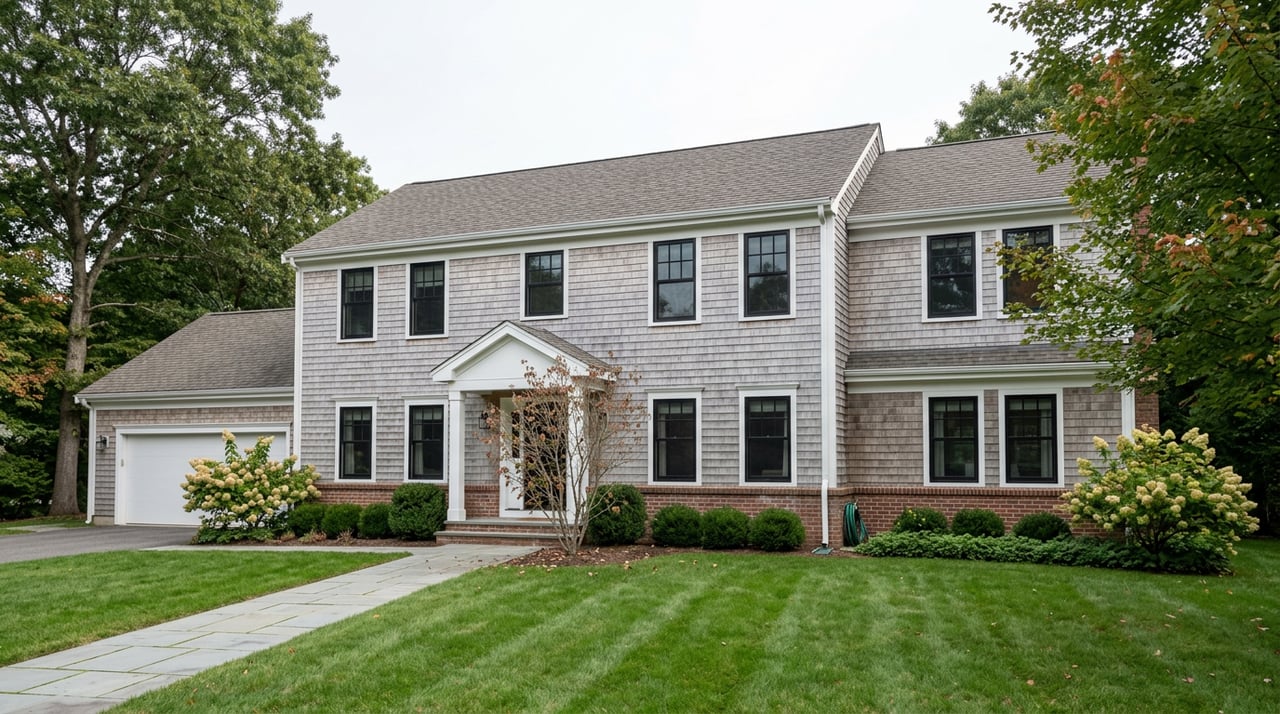
A buyer's inspector is standing in a Roslyn Heights backyard with a ground-penetrating radar unit, and the seller is standing a few feet away insisting there's nothing to find. The house runs on gas. It has for years. There's no oil bill, no delivery truck in the driveway every winter, nothing that would suggest a tank is buried anywhere on the property. Then the radar returns a shape under the side lawn that looks exactly like a 550-gallon steel cylinder, and the closing that was two weeks out is suddenly on hold.
This scenario plays out often enough in Roslyn Heights that it's worth understanding why, because the reason has nothing to do with bad luck and everything to do with how this specific neighborhood changed its heating fuel over time.
The Switch That Created the Problem
Roslyn Heights has been moving away from heating oil for years. Local fuel-tracking data shows the hamlet had 1,542 households heating with oil in 2013. That number had dropped to 976 by the most recent available estimate, a decline of roughly 37 percent, while the count of homes on natural gas climbed from 2,105 to 2,604 over the same stretch. Gas had become the primary heating fuel in close to two-thirds of Roslyn Heights homes, per that same data.
On paper, that's a clean story about modernization. In practice, a fuel switch on Long Island rarely means someone dug up the old tank. It usually means a boiler got swapped, a gas line got run, and the underground steel tank that used to feed the oil burner got disconnected, drained, and left exactly where it was. Converting to gas doesn't require removing what came before it. So every home that made that switch without a documented tank closure is a home where a buried tank may still be sitting there, unrecorded and unmentioned, sometimes for decades.
Run that math across Roslyn Heights and you get more idle, undocumented tanks in the ground today than there were active ones a decade ago. The fuel shift didn't shrink the risk. It just moved it out of sight.
Built for Oil, Piped for Gas Later
The timing of Roslyn Heights' construction makes this more likely, not less. The typical home in the hamlet is around 48 years old, which puts most original construction in the late 1970s, and a meaningful share of the housing stock is older still. Part of Roslyn Heights, the section known today as Roslyn Country Club, was developed by Levitt & Sons in the 1950s and 60s as part of the same wave of postwar Long Island building that produced Levittown and Hicksville. Homes from that era were built almost universally with underground oil heat, because that was the standard residential fuel delivery method at the time. Gas conversions came later, sometimes much later, and the paper trail from those conversions is inconsistent at best.
This is the piece that gets missed in a quick market scan. A buyer comparing a 1958 split-level to a newer build isn't just comparing square footage and finish level. They're comparing two different eras of underground infrastructure, and only one of those eras came with any expectation that a tank might need to be dealt with before the deal closes.
The Contract Doesn't Mention It
Here's where the friction actually starts. New York's standard residential contract of sale, the form jointly drafted by the New York State Bar Association, the New York State Land Title Association, the New York City Bar, and the New York County Lawyers' Association, does not address underground oil tanks. It doesn't cover asbestos, radon, or lead paint either. Real estate attorneys who work with this form regularly note that environmental issues like a buried tank have to be added separately, through a rider, or they simply aren't part of the deal.
That means the tank question isn't automatically on anyone's checklist. If the buyer's attorney doesn't think to add rider language addressing a known or suspected tank, and the seller's attorney doesn't raise it either, the first time it surfaces might be when an inspector walks the property with a radar unit. At that point, it's not a negotiating point anymore. It's a stalled closing.
What a Sweep Actually Finds
A tank sweep uses ground-penetrating radar to scan for buried metallic objects, old excavation lines, and soil disturbances consistent with a tank pit. Environmental firms serving Nassau County, including Eastern Environmental Solutions and C2G Environmental, run this kind of scan as a standard part of pre-listing or pre-purchase due diligence. It typically runs $300 to $700 and takes a few hours.
A positive result doesn't automatically mean disaster. Plenty of tanks sit in dry, sandy Long Island soil for decades without leaking. But a positive result does mean someone has to decide what happens next, and that decision now runs on a clock set by the buyer's mortgage timeline.
| Scenario | Typical Cost Range |
|---|---|
| Tank sweep or inspection | $300 to $700 |
| Clean underground tank removal, no contamination | $1,800 to $3,000 |
| Soil contamination remediation | $8,000 to $10,000 or more |
The spread between the top and bottom rows is the entire reason this issue matters to a seller. A clean removal is a manageable line item. A contaminated removal is a five-figure conversation, and it's one that surfaces at the worst possible moment in a transaction if nobody looked for it earlier.
Why Lenders Won't Look the Other Way Anymore
Even a clean tank creates a financing problem now. FHA, VA, and most conventional lenders in New York have become increasingly reluctant to fund a purchase on a property with a known underground storage tank until it's removed and soil testing comes back clean. Escrow holdbacks, where funds are set aside at closing to cover a future removal, used to offer a workaround. That option is becoming rarer as lenders tighten their standards. In practice, this means the tank question has to be resolved before closing, not after, which is exactly the opposite of how most sellers assume it will play out.
The Regulatory Layer Most Buyers Never See
New York State doesn't directly regulate most residential heating oil tanks, since the majority fall under 1,100 gallons and sit below the threshold for state Petroleum Bulk Storage rules. But Nassau, Suffolk, and Westchester are what the state Department of Environmental Conservation calls delegated counties, meaning they've adopted their own local rules that go further than the state minimum. In Nassau County, tank abandonment and removal fall under Article XI of the Public Health Ordinance, administered by the Nassau County Department of Health's Bureau of Environmental Protection out of its Mineola office. Filing a closure runs a modest fee, well under $100, but the paperwork has to exist. If a prior owner abandoned a tank decades ago without filing that closure, there's no county record to point to, and the current owner inherits the gap.
Timing It Right
The single biggest lever a seller has here is time. Ordering a tank sweep two to three months before listing gives enough runway to get soil tested, file the right paperwork with Nassau County, and either remove the tank or document a proper abandonment, all before a buyer's attorney ever asks the question. Waiting until an accepted offer is already on the table means doing the same work under a deadline, with a nervous buyer and a lender watching the calendar.
For buyers, the practical move is making sure the purchase contract's rider specifically addresses the tank question rather than relying on the standard form to cover it. It won't.
A Few Straight Answers
My house has always run on gas. Could there still be a buried tank? Yes. If a previous owner converted from oil at any point, the tank may have been disconnected rather than removed. Unless there's a Nassau County closure filing on record, there's no way to confirm it was handled properly without a sweep.
If a sweep comes back clean, am I in the clear? A negative GPR result is reassuring, but pairing it with any available closure documentation is still the stronger position. If no paperwork exists and no tank is found, that absence of a record is itself worth noting to a buyer's attorney, since it closes the question rather than leaving it open.
What happens if a tank turns up mid-contract? The rider language in the contract determines who pays for what and what timeline applies. This is exactly why addressing it in the rider before signing, rather than reacting to a surprise finding, keeps the deal on schedule instead of in limbo.
Roslyn Heights' shift toward gas heat is a genuine improvement for the neighborhood's housing stock. It just isn't the same thing as clearing the ground underneath it. If you're planning to sell a home that made that switch, or you're evaluating one that has, it's worth understanding exactly what's documented and what isn't before a buyer's inspector finds out for you. Reach out to Dalia Elison to schedule a confidential consultation and get ahead of the question before it becomes a delay.