If you are trying to understand land and lot value in Old Westbury, acreage alone will not tell you enough. In this market, two parcels with the same size can carry very different value depending on zoning, lot shape, privacy, and how well the site supports an estate-style home. If you are buying, selling, or evaluating a property, it helps to know what serious buyers and advisors actually look at. Let’s dive in.
Why land value works differently here
Old Westbury has a very specific land-use pattern, and that history still shapes pricing today. The village evolved from Quaker farms to large estate properties, and after World War II many of those estates were divided into two-acre subdivisions. In 1987, the village up-zoned to four-acre residential properties and created lot averaging.
Today, the village planning update describes Old Westbury as a low-density, predominantly single-family community. Golf courses, equestrian uses, Old Westbury Gardens, and educational campuses are part of that landscape. That context matters because buyers are often valuing more than dirt and dimensions. They are valuing setting, privacy, tree cover, and the ability to preserve an estate feel.
The village’s planning goals also point in the same direction. They include protecting community character, diversifying housing options, and stabilizing the tax base. For land valuation, that means a parcel may command a premium when it supports the wooded, low-intensity visual character that defines Old Westbury.
Zoning drives lot value
In Old Westbury, zoning is one of the clearest drivers of land value. The legal use of the parcel, and whether it can be improved without special relief, often has a direct impact on price.
A lot that is conforming, well-shaped, and easy to develop within the code is usually more valuable than a lot with the same acreage that has frontage issues, awkward dimensions, or a limited building envelope. Buyers at the upper end of the market tend to pay attention to these details early because they affect both design flexibility and long-term resale.
B-4 estate zoning matters most
The B-4 Residence District is the core estate district in Old Westbury. It requires four acres per single-family home and permits 6% combined building area for the principal dwelling and accessory buildings, with total coverage capped at 25%.
Setbacks are also substantial. Lots up to 5.99 acres require 150-foot front yards and 100-foot side and rear yards, and several major village roads require 200-foot front yards. Accessory structures generally must be 75 feet from property lines.
There is another important test in B-4. Each lot must fit a 350-foot-diameter circle containing the principal building, although lots created through lot averaging may use a 300-foot circle. That means a parcel can have enough acreage on paper but still lose value if its shape does not support a compliant estate footprint.
Other residential districts affect value differently
Not every lot in Old Westbury follows the same rules. North of the Long Island Expressway, single-family homes generally require four acres. South of the expressway, lots are often two or four acres, while the southwest corner includes one-acre B lots and 8,000-square-foot A lots.
The BB Residence District requires two acres per dwelling, 8% combined building area, 25% total coverage, a 75-foot front yard, 50-foot side and rear yards, and 200-foot frontage on the front street line. The B Residence District requires one acre per dwelling, 10% building area, 25% total coverage, a 40-foot front yard, 25-foot side yards, a 50-foot rear yard, and 140-foot frontage.
These differences matter because buyers do not just compare price per acre. They compare what each parcel legally allows, how much flexibility it offers, and whether it aligns with their intended use.
Lot averaging can change value
Lot averaging is part of the Old Westbury code, but it is not a routine subdivision shortcut. It requires authorization from the Board of Trustees and is intended to support improved subdivision design, environmental protection, groundwater recharge, open-space preservation, and buffer screening.
Under the code, the number of lots is calculated by dividing the property acreage by four and rounding down. No individual lot may be less than three acres unless a landmarked structure is involved, in which case the Board may allow a lot as small as one acre.
For valuation, this creates an important distinction. A large parcel is not automatically a development site. Its value depends on whether lot averaging is realistically supportable, whether the land can be designed in a way that meets the code’s purpose, and whether the final lots would still function as attractive estate parcels.
Privacy and setting add real value
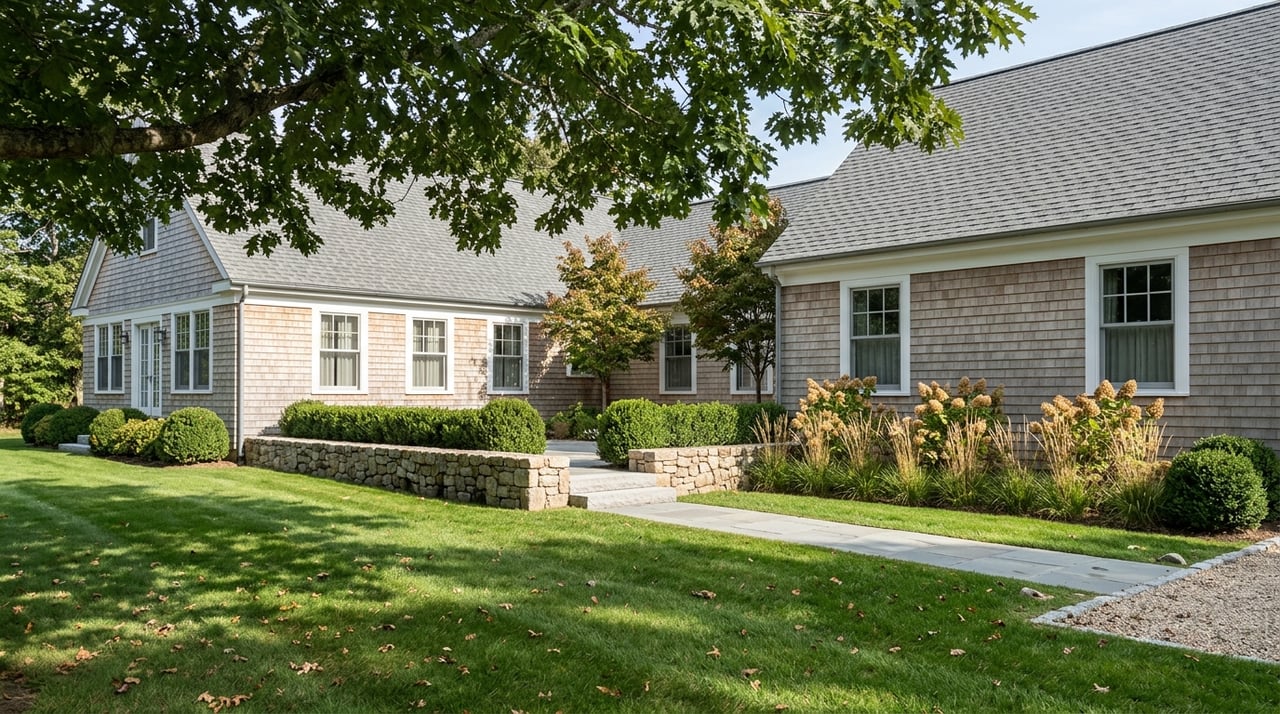
In Old Westbury, privacy is not just a lifestyle feature. It is often part of the land premium. The village planning study describes the visual character as large homes set back from winding local roads and screened by street trees and vegetation.
The same study states that street trees and vegetative buffers increase real estate values. That helps explain why wooded parcels, long setbacks, and natural screening often attract stronger buyer interest than open sites with less separation from the road or neighboring homes.
This is also part of the village’s larger identity. Historic efforts to preserve tree canopy and buffer areas helped maintain the estate setting that many buyers are seeking today. In practical terms, land value in Old Westbury is often tied to whether the site can support a home without losing that sense of privacy and scale.
Physical features can raise or reduce value
A parcel’s physical features can work in two directions. Some characteristics strengthen value, while others limit the usable portion of the lot.
Old Westbury sits where the flat Hempstead Plains gave way to rolling woodland, and Long Island’s north shore includes the Harbor Hill moraine, a glacial ridge formed from till, sand, and gravel. That landscape can create beautiful topography, mature tree cover, and a more secluded estate setting. It can also create design constraints depending on slope, drainage, and layout.
The village is within the Oyster Bay Special Groundwater Protection Area, and its water supply is pumped from wells in the Magothy aquifer. Because groundwater recharge and open-space preservation are part of local planning priorities, natural features such as trees, drainage areas, ponds, and buffers may add to a parcel’s appeal while also reducing buildable area.
That is why “usable land” is often more important than gross acreage. A site may look generous in size, but its value depends on how much of that land can support the house, driveways, accessory structures, and outdoor improvements while still meeting the code.
What buyers and appraisers usually evaluate
When serious buyers, sellers, and valuation professionals assess land in Old Westbury, they usually move through a practical checklist. The Appraisal Institute frames highest and best use around what is physically possible, legally permissible, financially feasible, and maximally productive.
In this market, that often translates into a few simple but important questions.
Key questions that shape lot value
- Does the parcel conform to the applicable zoning district for lot area, frontage, and setbacks?
- Does the lot shape allow a workable building envelope?
- Can the site support the principal home and accessory improvements without pushing against limits?
- Do topography, trees, ponds, wetlands, drainage, or access issues reduce usable land?
- Is the parcel best suited as one estate site, or does lot averaging appear realistic?
- Can improvements be added while preserving the privacy and wooded character that buyers expect in Old Westbury?
A clean “yes” to more of these questions usually supports stronger land value. A “maybe” or “no” on several of them can narrow the buyer pool and reduce pricing power.
Raw acreage is not enough
One of the most common mistakes in estate-land pricing is assuming that more acreage always means proportionally more value. In Old Westbury, that is often not the case.
A conforming four-acre parcel with strong frontage, a good building envelope, mature buffers, and a straightforward estate-use profile may outperform a larger parcel with awkward dimensions or development uncertainty. Likewise, a parcel that appears impressive on paper may trade at a discount if too much of the land is difficult to use.
The market typically rewards estate usability more than raw size alone. In a village where large-lot single-family development remains the core zoning pattern, function and fit matter just as much as scale.
What this means if you are selling
If you own land or an estate property in Old Westbury, your lot value should be framed around more than acreage. Buyers want to understand conformity, building potential, privacy, and how the site supports the kind of home and grounds they envision.
That means presentation and pricing should be precise. A thoughtful valuation should account for district rules, lot dimensions, setbacks, site conditions, and whether the parcel offers a clean as-of-right outcome. For larger holdings, it should also carefully assess whether lot averaging is realistic rather than assumed.
For luxury estate sellers, this is where technical fluency can make a meaningful difference. The right strategy helps position the land not just as a piece of property, but as a viable and compelling estate opportunity.
What this means if you are buying
If you are considering land or a teardown opportunity in Old Westbury, it is smart to look past appearance and focus on buildable reality. The parcel may be beautiful, but the real question is how that beauty works within the code.
Before you assign value, you will want clarity on zoning district, setbacks, frontage, lot shape, and any physical conditions that affect planning. In this market, the strongest acquisitions are often the ones where legal use, site design, and long-term estate appeal all line up.
A disciplined review upfront can help you avoid overpaying for land that looks impressive but offers less flexibility than expected. It can also help you recognize premium sites that other buyers may undervalue if they focus only on acreage.
If you are evaluating land, an estate property, or a potential new-build opportunity in Old Westbury, working with an advisor who understands valuation, site usability, and presentation can help you make a more informed decision. Dalia Elison offers discreet, data-informed guidance for luxury sellers, buyers, and developers across the North Shore Gold Coast.
FAQs
How is land value different from home value in Old Westbury?
- Land value focuses on the parcel itself, including zoning, lot size, frontage, setbacks, shape, privacy, and usable building area rather than the house alone.
What zoning rules affect lot value in Old Westbury?
- Key factors include the applicable zoning district, minimum acreage, frontage, setbacks, building coverage, and whether the parcel can support a compliant building envelope.
Does more acreage always mean higher lot value in Old Westbury?
- No. A larger parcel can be worth less than a smaller one if it is awkwardly shaped, less usable, or dependent on discretionary approvals.
What is lot averaging in Old Westbury?
- Lot averaging is a village-authorized subdivision approach in certain circumstances that is intended to improve design, preserve open space, support groundwater recharge, and maintain buffering rather than serve as a routine subdivision tool.
Why do trees and buffers matter for Old Westbury land value?
- The village planning study states that street trees and vegetative buffers increase real estate values, and they also support the estate-style privacy many buyers want.
What should buyers review before buying land in Old Westbury?
- Buyers should review zoning district, minimum lot requirements, frontage, setbacks, lot shape, access, and physical site features that may limit buildable area or estate usability.