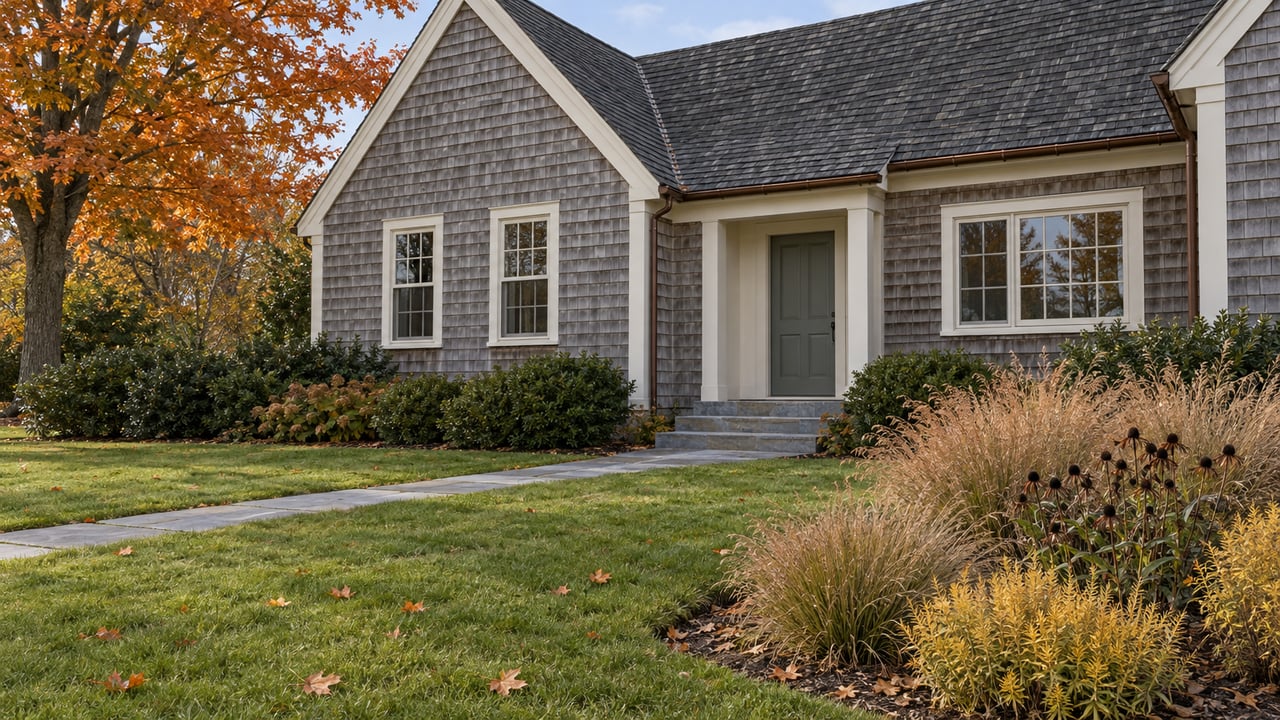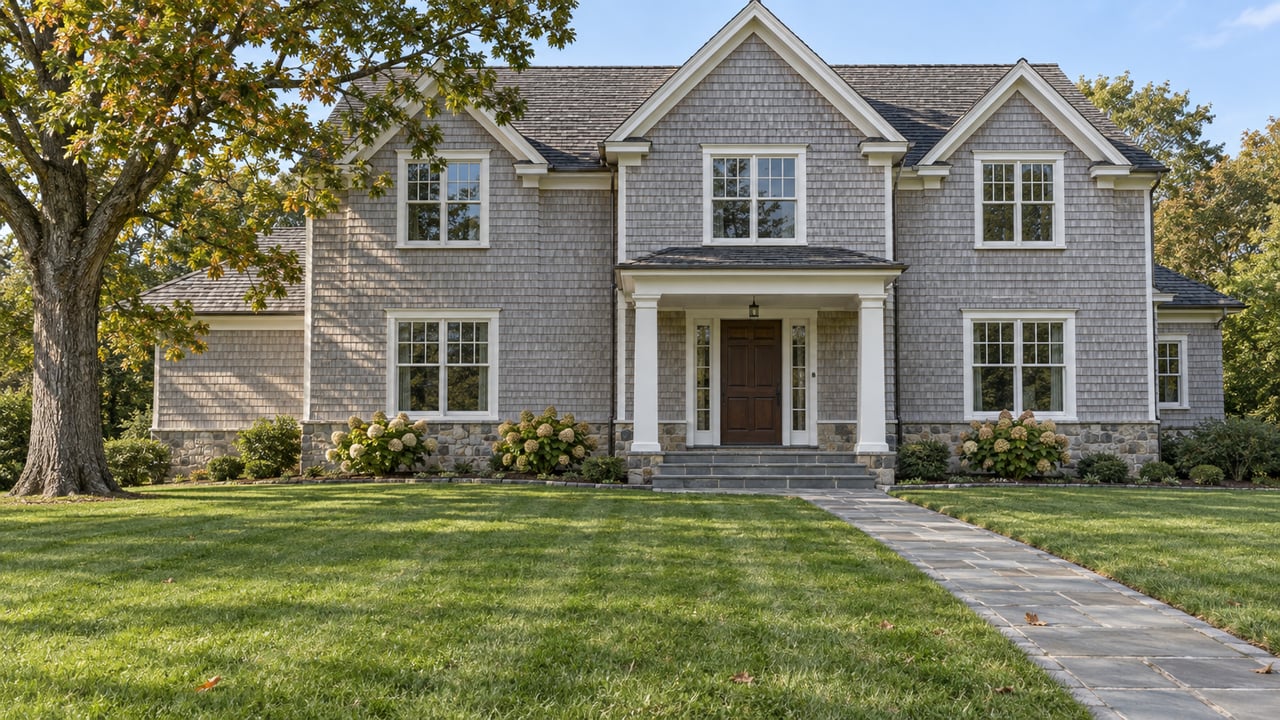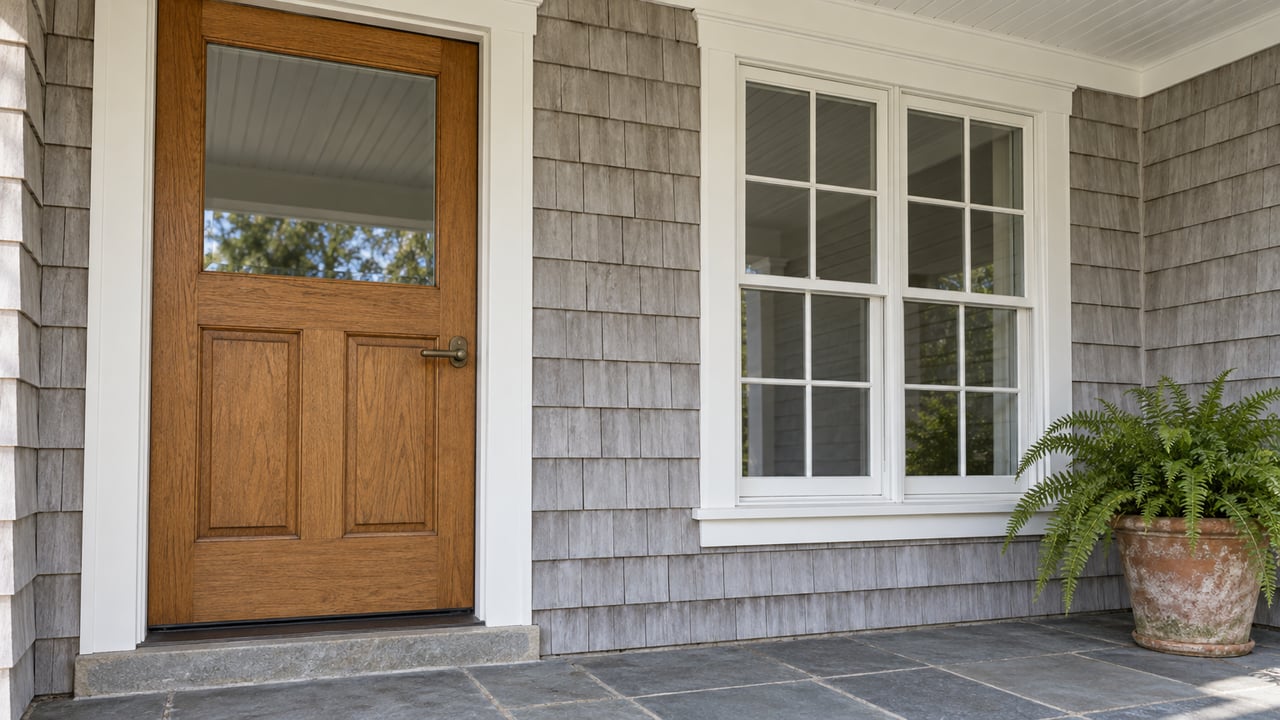
The building at 1347 Old Northern Boulevard has new wooden siding. On September 14, 2026, the Roslyn Landmark Society announced that the weatherboard installation was complete. The Society says that for the first time in more than 50 years, the mill's exterior looks the way it did when it was built in the early 18th century. Shutters and doors are still to come. The Society also said it would hold a media day in mid-October, though it hadn't announced details when it posted the update.
If you've driven past for years and noticed the scaffolding come and go, the new siding is the visible part of a much longer story. The mill's harbor-edge location is the reason it was valuable, and it's also the reason the building was closed for so long. Nearly every phase of the restoration has dealt with water in one way or another.
A Mill Exists Because of Water
The site was chosen before the building. On April 2, 1698, the Town of Hempstead gave John Robeson, later spelled Robinson, permission to build a grist mill at the Head of Hempstead Harbor on Old Northern Boulevard. The permission came with a condition that the mill be built and running within two years. Nobody knows exactly when the building now standing went up. The Landmark Society's profile says it was built and improved over time between 1715 and 1741.
The building matters partly because of how it was framed. Its builders used Dutch mill styles from the Netherlands and Zealand that no longer survive in Europe. That makes the Roslyn mill one of the last Dutch-type water mills in the United States. It was built for commerce, not as a farm mill. According to the Society's April 2026 update, it served as the center of the local economy for more than 150 years. On April 24, 1790, President George Washington visited mill owner Hendrick Onderdonk at his home next to the mill and mentioned the mill in his diary.
The Same Water, Working Against It
The harbor that powered the mill also wore it down. A historic structures report summarized by the William G. Pomeroy Foundation blamed the building's decline on deferred maintenance, a high water table, and periodic tidal flooding.
People had tried to save it before. In 1916, the Hicks family sold the mill to five trustees, among them Harold Godwin, a grandson of William Cullen Bryant, who planned to make it a museum of industrial arts. Between 1916 and 1917, workers reinforced the old beams and poured a concrete base under the foundation. Roslyn mason Romolo Caparrelli and carpenter Stephan Speedling put in a concrete first floor and added exterior concrete shaped to look like the original plank boards. So for much of the 20th century, some of the "planks" passersby saw were concrete made to look like wood.
The museum opened on June 30, 1917. From 1920 to 1974, the building ran as a tea house and drew visitors to the village. It has been closed to the public since 1974, and Nassau County, which bought it in 1976, still owns it. It was added to the National Register of Historic Places in 1986. The Society describes what followed as 42 years of delays and planning before restoration finally started.
Lifting a Three-Century-Old Building
The current effort came together in 2016, when the Landmark Society started a fundraising campaign in partnership with the Village of Roslyn and Nassau County, according to Preservation Long Island. The county kept ownership. The Society signed an inter-municipal agreement to improve, manage, maintain, and run the mill as an education center.
Phase 1 fixed the problem at the bottom of the building. Instead of reinforcing the structure where it stood, as the 1916 effort had done, the team lifted it, built a new foundation underneath, and set it back down. Here is the sequence the Society reported in its September 2024 community update:
- November 2018: Restoration begins.
- 2020: The mill is raised off its old base.
- August to November 2021: The new foundation is built.
- July 2023: The structure is lowered onto the new foundation.
When the building was lowered, Newsday reported that Phase 1, which centered on the new foundation, cost about $4 million. Phase 1 also included conservation of the historic timber frame. The Society names John G. Waite Associates as preservation architect and Cole Company as construction manager, and it credits Chris Cole and his team with guiding the Society through the project.
What Phase 2 Put Back on the Outside
With the foundation finished, Phase 2 moved to the parts people can see. The Society's April 2026 update listed the work: the timber frame rehabilitated, the south wall rebuilt, and a cedar shingle roof installed, the first one on the building in decades. The siding went on over the summer. A July 14 update said siding and window framing were done on the west side, the north side was underway, and the east side was next. The September announcement confirmed the weatherboard was finished.
Public money paid for much of this phase. In December 2023, the Society received a $500,000 Save America's Treasures grant for Phase 2. Congressman Tom Suozzi started that grant effort. On April 25, 2026, Nassau County Executive Bruce Blakeman gave the Society the second and final $1 million of the county's $2 million capital commitment, at a ceremony at the mill. County Comptroller Elaine Phillips, County Legislator Samantha Goetz, and Town of North Hempstead Supervisor Jennifer DeSena also attended. In the Society's account of the event, Co-President Howard Kroplick thanked Blakeman, saying, "this promise you made is a promise you kept."
The county money joins a long list of funders. Between 2015 and 2024, the Society reported raising more than $6.3 million from the Gerry Charitable Trust, the Robert David Lion Gardiner Foundation, Nassau County, the New York State Regional Economic Development Council, Save America's Treasures, Professor Tim Bestor, a descendant of the mill's original builders, and its own members and sponsors.
Phase 3 Brings the Water Back In
The first two phases protected the building from water. The third puts water back to work, while also changing how stormwater moves across the site. According to the Society, Phase 3 includes:
- Restoring and building the mill's water wheel
- Moving the gearing back into the building
- Relocating the stormwater basin
- Creating an ADA-accessible public entrance
Funding for this phase began before the siding went on. On December 23, 2024, the New York State Office of Parks, Recreation and Historic Preservation awarded the Society a $675,000 Environmental Protection Fund grant for Phase 3. The Society said Nassau County would provide the matching funds. As of mid-October 2026, the sources we reviewed don't give a start date for Phase 3.
Once it opens, the mill will be an education center with historical exhibits, educational programs, community events, and STEAM-focused learning. Long Island Press described a museum where schoolchildren could learn how grain becomes bread. In April 2026, the Society said it expected the mill to open to the public in 2027, which would make it the first time in more than fifty years that the building has had visitors. Earlier timelines aimed for 2024 or 2025, so 2027 is the current target, not a fixed date.
A Short Stop for Now
For now, the building is still closed while work continues, but you can see the new exterior from Old Northern Boulevard. The mill was also one of 26 stops on the 2026 Long Island History Hunt, which ran from May 23 through September 30.
The village has another finished restoration nearby. At Gerry Pond Park, 36 Main Street, work on the Hicks Memorial Bridge and Hicks Memorial Centre was celebrated as complete on October 31, 2025. Long Island Press reported that the project included stabilization, stone and mortar repairs, a replica plaque, and a rebuilt railing and sidewalk.
If you want lunch after a look at the mill, Mythos Kitchen just opened at 1380 Old Northern Boulevard, in the former Shish Kabob Grill space. It is the first Long Island location of the Flushing Greek restaurant, and Jimmy Theodoropoulos, son of founder Peter Theodoropoulos, runs it. The Long Island Times lists daily hours of 11 a.m. to 10 p.m. and a menu that includes loukaniko, halloumi, moussaka, and souvlaki platters.
Raising, re-founding, and re-siding a building from the early 1700s takes patient, careful work. That kind of construction knowledge is at the center of how Dalia Elison advises owners of older homes on the Gold Coast. If you own a historic Roslyn property and are weighing restoration, renovation, or an eventual sale, we would be glad to talk it through. Schedule a Confidential Consultation.