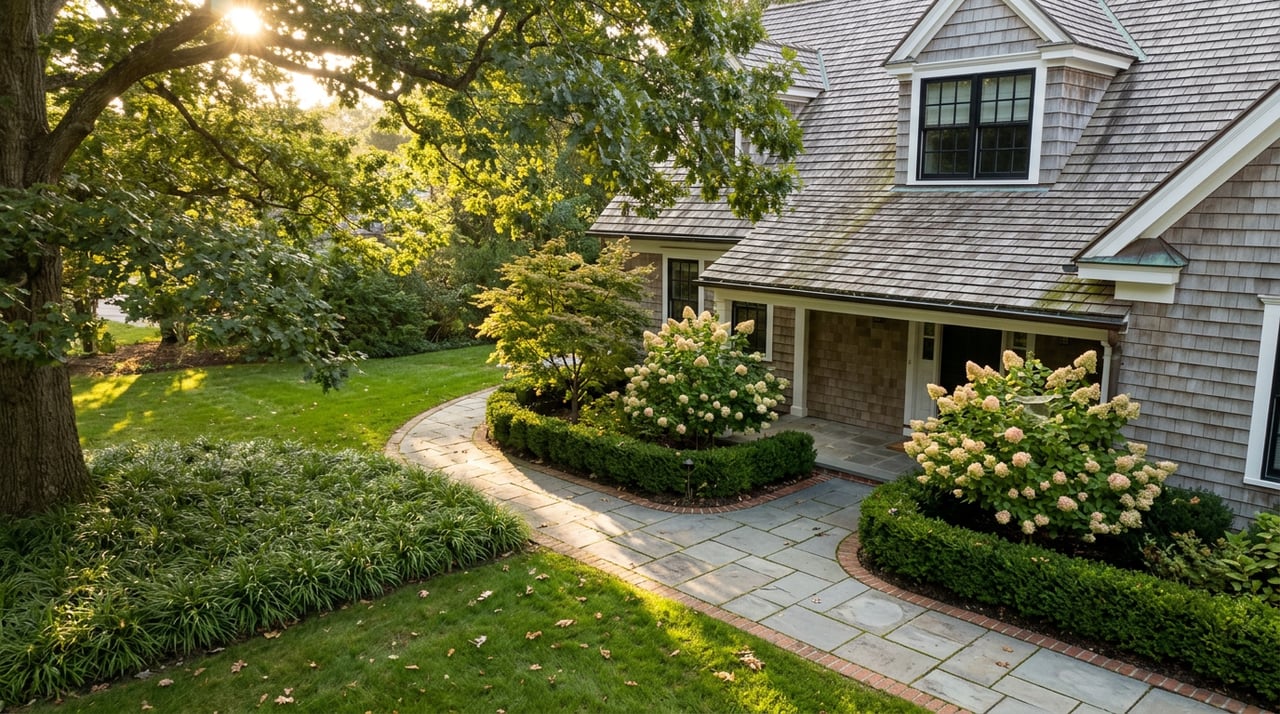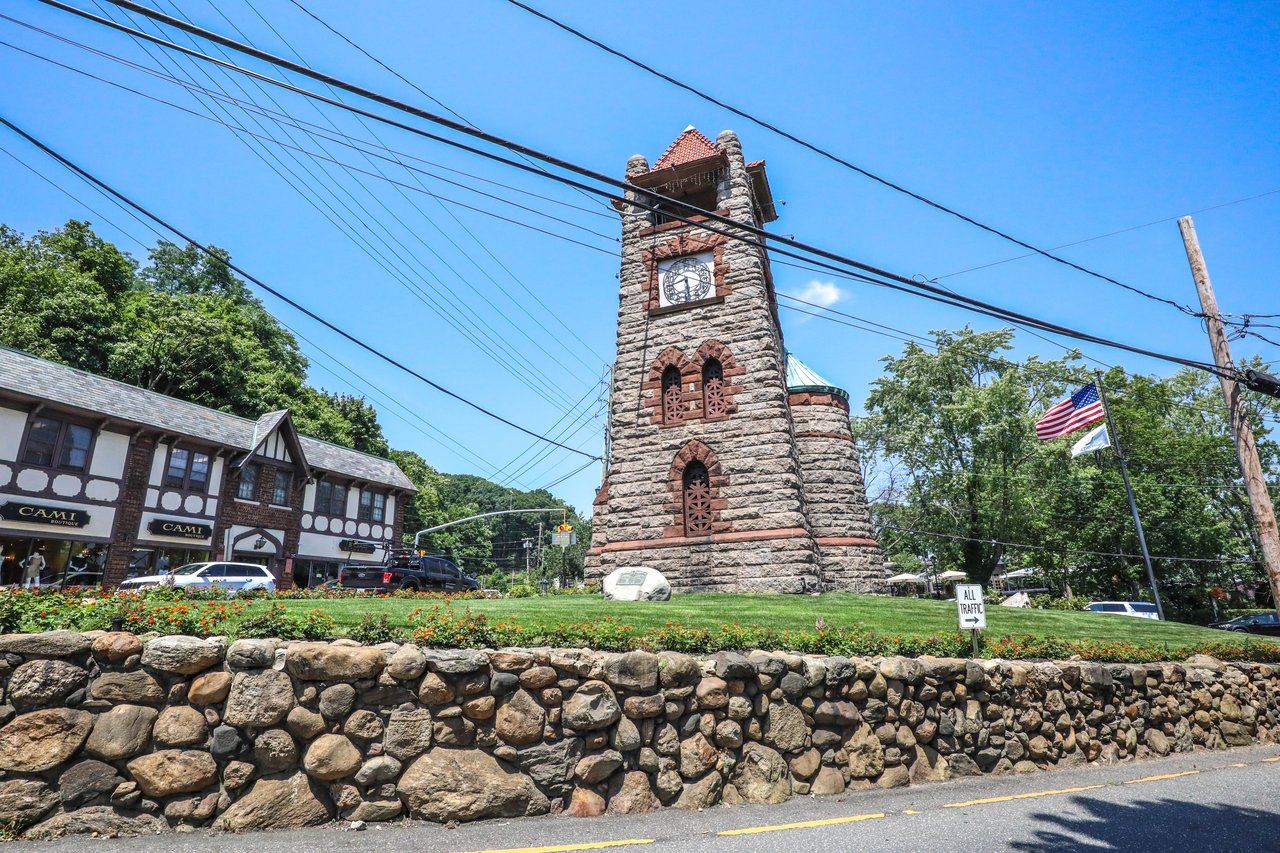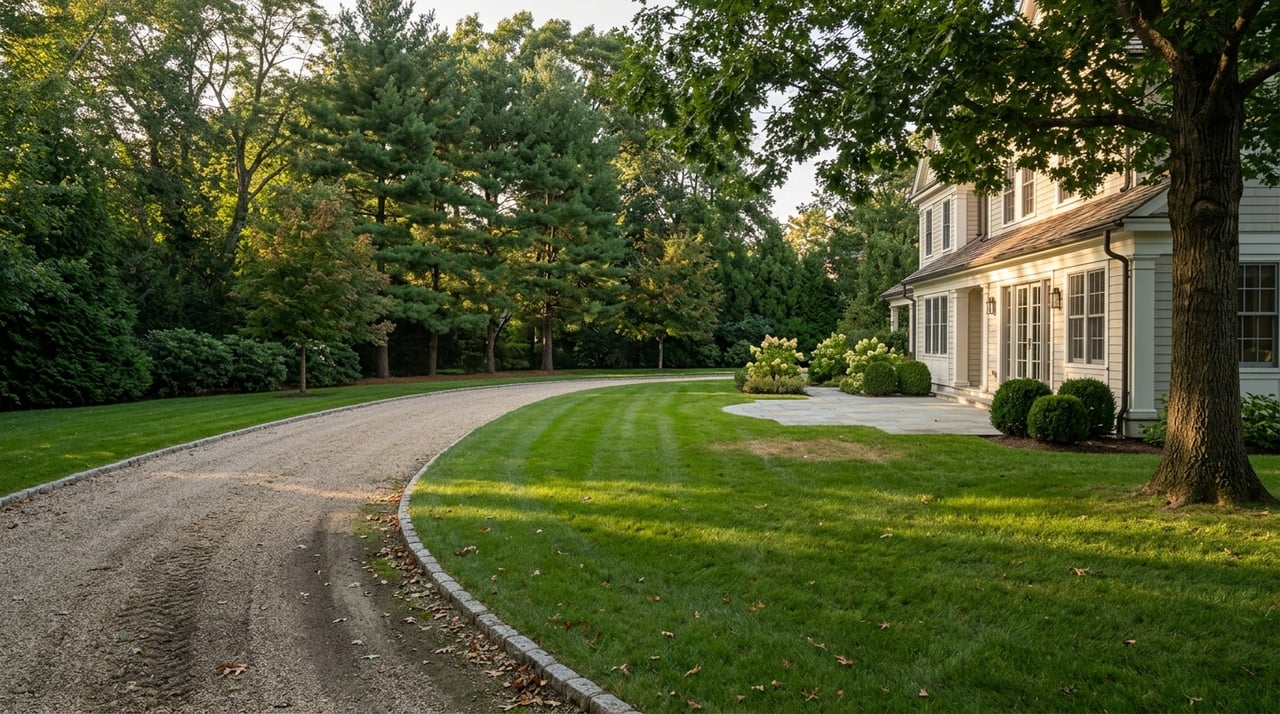
Two raw land parcels closed recently in Old Westbury, both inside the same village, both zoned for a single custom home. One sold in February 2026 at $661,892 per acre. The other sold not long before or after it at closer to $580,000 per acre. Neither buyer overpaid or underpaid in any obvious sense. They were buying two different things that happen to be measured in the same unit.
That gap is the thesis of this piece: in Old Westbury, an acre is not a fixed quantity of buildable house. Past a certain lot size, an extra acre buys you distance from your neighbors and very little else, because the village's zoning code caps how much structure you're allowed to put on the ground regardless of how much land surrounds it. Anyone pricing land, a teardown, or a new build here by simple price-per-acre math is measuring the wrong thing.
The formula that sets the ceiling before you draw a single wall
Old Westbury zones most of its residential land into two large-lot categories. The BB Residence District requires at least two acres, 87,120 square feet, for a single-family home. The B-4 Residence District requires four acres, 174,240 square feet. Those thresholds aren't just density rules. They come attached to a volume cap that determines the maximum cubic footage of the house itself.
For a lot at the two-acre BB minimum, the code allows a maximum building volume of 78,000 cubic feet. Add more land beyond that first two acres and the allowance grows, but slowly: the village divides the excess lot area by 2.5 and adds that to the 78,000 base. Cross into B-4 territory at four acres and a similar stepped formula applies, again starting from a fixed base and growing in small increments per additional square foot.
Do the arithmetic on that formula and the picture is clear. Going from 2 acres to 3 acres adds roughly 17,400 more allowable cubic feet, not a proportional 50 percent increase in house size. Going from 3 to 4 doesn't unlock a meaningfully bigger structure either, it mostly buys setback and yard. The extra land is real. The extra house is not.
That's the mechanism behind the price-per-acre gap. A buyer purchasing a 2-acre parcel is purchasing near the top of the volume curve where every additional square foot of land still translates into meaningful buildable capacity. A buyer purchasing a 5-acre parcel is purchasing mostly privacy and lawn, because the house they're legally permitted to build was already capped acres ago. The market prices that difference correctly even when nobody explains why: smaller, more efficient lots trade at a premium per acre, and large multi-acre parcels trade at a discount per acre, because the second buyer isn't paying for buildable square footage at all. They're paying for space between themselves and the road.
What two actual sales confirm
This isn't theoretical. A 3.7-acre land parcel on Maple Crest Drive sold in February 2026 for $2,449,000, working out to $661,892 per acre after closing two percent below its list price in 24 days. Around the same window, a parcel on Old Westbury Road closed near $580,723 per acre after 106 days on market. Both are raw land in the same village, both zoned similarly, and both landed in a price-per-acre band well below what smaller, more conventional single-acre lots command when they trade in the village.
The buyers of both parcels weren't getting a discount because something was wrong with the land. They were paying fair value for what the volume formula actually lets them build, and the market has quietly adjusted per-acre pricing to reflect that ceiling rather than the raw acreage.
The listing that sat for 477 days
There's a cautionary version of this story too, and it belongs to a finished house rather than raw land. A completed home on Polo Drive, 7,925 square feet on six bedrooms and eight baths, sat on the market for 477 days before closing in September 2025 at $4.8 million, 36 percent below its original list price.
A sale that far below ask after that long on market usually means the original price assumed the land was worth more than the buildable house on top of it justified. If a seller or a builder prices new construction as if every acre carries the same buildable value as the first two, buyers eventually correct that assumption for you, and they do it with a discount, not a conversation.
How a builder plays the same math on purpose
The clearest demonstration of this mechanism at work isn't a single teardown, it's an entire community. Kean Development built Spring Hill at Old Westbury on the former 160-acre Phipps estate, assembling the land into a guard-gated enclave centered on a three-acre lake with a floating boathouse. Individual raw lots inside Spring Hill, several in the five-acre range, list in the $3.5 million to $5.675 million range, while completed Kean-built estates on those same lots have traded from roughly $28 million up to $38.8 million.
That spread only makes sense once you separate land value from buildable value the way the zoning code forces you to. Kean isn't selling five acres because five acres unlocks a proportionally larger house. Kean is selling five acres because the lake frontage, the mature tree canopy, and the guard-gated seclusion are the product, and the house that sits on top of it is sized by the same volume formula every other Old Westbury lot answers to. The land premium in Spring Hill is a privacy premium, not a square-footage premium, and the pricing reflects that once you know where to look for it.
What this means if you're buying, selling, or building right now
As of mid-June 2026, Old Westbury had 36 luxury homes on the market with a median list price of $3.89 million and an average of 117 days on market, with six homes sold in the village over the prior month. A separate snapshot in July 2026 showed new construction running thinner still: only three new-build listings, with a median price of $3.5 million and a comparable 115 days on market.
Thin new-construction inventory combined with a 115-to-117-day market means buyers have room to negotiate, but it also means sellers of raw land or spec homes need their pricing to reflect what the zoning formula actually permits, not what the acreage suggests it should. If you're evaluating a multi-acre parcel, the question isn't "what did the last acre in this village sell for." It's "how many of those acres are actually adding buildable volume, and how many are adding lawn." Those are different products with different ceilings, and treating them as the same thing is how listings end up sitting for over a year waiting for the market to agree with a price nobody checked against the code.
A few questions worth asking before you commit to a number
Does the volume cap apply to renovations of existing homes, or only new construction? The cap governs total building volume regardless of whether the structure is new or altered, so an addition to an existing home on a two-acre BB lot is measured against the same 78,000 cubic foot base as ground-up new construction on that size parcel.
Can a large parcel be subdivided to get around the volume limits? Old Westbury's B-4 district allows lot averaging in some cases, where the Planning Board can authorize smaller individual lots within a larger subdivision, but only when the village determines the arrangement benefits the community through better site design or open space preservation. It's a case-by-case approval, not a standard entitlement.
Is a lower price per acre on a large parcel actually a better deal? Not automatically. It reflects that you're paying less for buildable house and more for land you can't build on. Whether that trade makes sense depends on whether privacy, lawn, and setback are what you're actually trying to buy.
If you're weighing a multi-acre parcel, a teardown, or a new build in Old Westbury and want the zoning math run against a specific property before you make an offer or set a list price, Dalia Elison can walk through what the lot actually permits and what that means for value. Schedule a Confidential Consultation to get the numbers before the negotiation starts, not after.